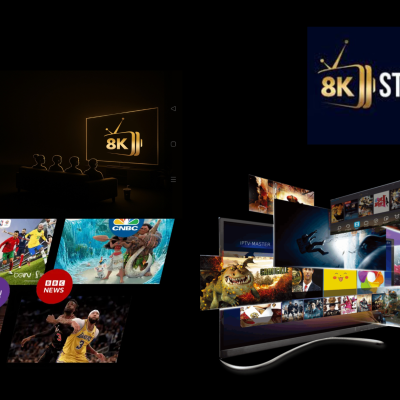
Are you ready to experience television like never before? The year 2026 promises a revolution in home entertainment, and at the forefront of this seismic shift is 8K Strong.
But with so many options flooding the market, how do you find the truly best IPTV service that delivers on its promises of power, reliability, and a wealth of features?
This comprehensive guide will equip you with the knowledge to navigate the exciting landscape of 8K streaming and pinpoint the service that will redefine your viewing experience.
The Dawn of 8K Strong
For years, 4K has been the benchmark for high-definition viewing. However, technology never stands still. 8K resolution boasts a staggering 7680 x 4320 pixels, four times the resolution of 4K and sixteen times that of Full HD.
This means incredibly sharper images, more vibrant colors, and a level of detail that can make you feel like you’re looking through a window rather than watching a screen. This leap in visual fidelity is now becoming accessible through IPTV (Internet Protocol Television), which delivers television content over the internet.
Why IPTV for 8K?
Traditional broadcasting methods struggle to keep pace with the bandwidth demands of 8K content. IPTV, on the other hand, leverages the ever-increasing speeds of broadband internet. This makes it the ideal delivery mechanism for the massive data streams required for 8K streaming.
Consequently, the best IPTV service in 2026 will undoubtedly be one that is not only capable of delivering 8K but does so with exceptional stability and a seamless user experience.
Defining the Best IPTV Service in 2026
When we talk about the best IPTV service available in 2026, we’re not just talking about picture quality. Several crucial factors contribute to a truly superior streaming experience. These include, but are not limited to:

1. Uncompromising 8K Content Availability
This is the most obvious, yet most critical, factor. The service must offer a substantial library of 8K content. This includes live channels, on-demand movies, and TV series. Without a robust selection of native 8K material, even the most advanced technology will fall short. Therefore, investigating the content library is paramount.
2. Unwavering Reliability and Uptime
Buffering and pixelation are the enemies of immersive viewing. A powerful IPTV service will utilize robust server infrastructure and efficient content delivery networks (CDNs) to ensure consistent streaming.
High uptime percentages (ideally 99.9% or higher) are non-negotiable for a premium experience. Consequently, user reviews and independent tests are invaluable here.
3. Blazing-Fast Speeds and Bandwidth
Streaming 8K content requires significant bandwidth. The best IPTV service will not only be optimized for high bitrates but will also work synergistically with your internet connection. While the service itself can’t magically increase your internet speed, its efficient data handling will maximize what you have.
For instance, a minimum recommended internet speed for smooth 8K streaming is often cited as 10-25 Mbps, but this can vary. Therefore, ensuring your home network can support these demands is essential.
4. Feature-Rich User Experience
Beyond the core streaming, a truly feature-rich IPTV service will offer:
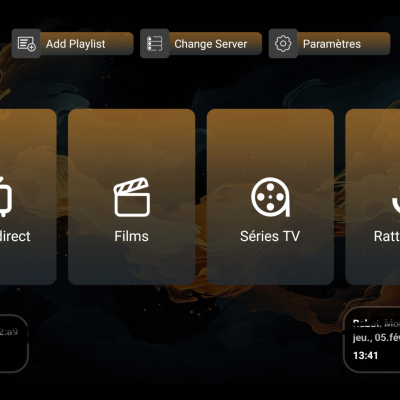
- Intuitive User Interface (UI): Easy navigation makes finding content a breeze.
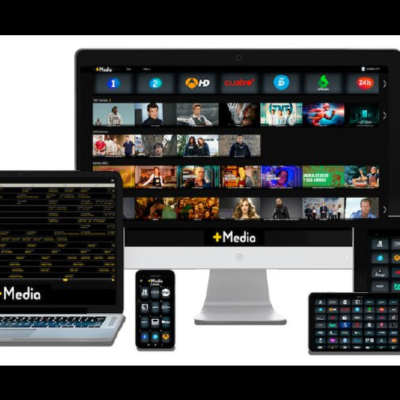
- Multi-Device Support: Watch on your smart TV, phone, tablet, or computer.
- Catch-Up TV and DVR Functionality: Never miss your favorite shows.
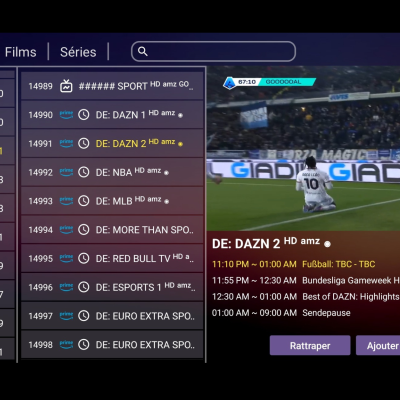
- Electronic Program Guide (EPG): Detailed scheduling information.
- Parental Controls: Essential for family-friendly viewing.
- Customization Options: Personalize your viewing experience.
5. Excellent Customer Support
Even the most reliable services can encounter occasional issues. Responsive and knowledgeable customer support can be the difference between a minor inconvenience and a major frustration. Look for services that offer multiple support channels (live chat, email, phone) and prompt resolution times.
6. Competitive and Transparent Pricing
While premium features often come at a premium price, the best IPTV service will offer clear pricing structures without hidden fees. Value for money is key, meaning you get a comprehensive package for your subscription cost. Be wary of services that seem too good to be true; they often are.
Top Contenders for the Best 8K IPTV Service in 2026
While predicting the future with absolute certainty is impossible, based on current trends and technological advancements, several types of providers are likely to dominate the 8K IPTV market in 2026.
It’s important to note that the landscape is dynamic, and new players can emerge. However, established providers and innovative newcomers are shaping the future.
1. Major Telecommunications Companies
Companies like Verizon, AT&T, and Comcast (Xfinity) are well-positioned to offer premium IPTV services. They already possess extensive network infrastructure and are investing heavily in broadband expansion. Their offerings often bundle TV, internet, and phone services, providing a convenient, albeit sometimes less flexible, solution.
Their advantage lies in their existing customer base and their ability to leverage their own networks for reliable delivery. However, their content libraries might be more curated and less diverse than specialized IPTV providers.
- Potential Strengths: High reliability, integrated services, strong infrastructure.
- Potential Weaknesses: Potentially higher cost, less content flexibility, may not focus solely on niche 8K content.

2. Dedicated IPTV Specialists
These are companies whose sole focus is delivering IPTV. They often specialize in offering a vast array of channels and on-demand content, catering to diverse viewing preferences. As 8K technology matures, these specialists are likely to be at the forefront of curating and delivering 8K content.
Look for providers that explicitly market their 8K capabilities and have a proven track record of adopting new technologies.
- Potential Strengths: Extensive content libraries, focus on cutting-edge technology, potentially more affordable options.
- Potential Weaknesses: Reliability can vary, customer support might be less robust than major telcos, requires a separate subscription.
3. Streaming Device Manufacturers and Platforms
Companies like Apple, Google (Android TV), and Amazon (Fire TV) are increasingly integrating TV services into their ecosystems. While they might not offer a single, all-encompassing 8K IPTV service themselves, their platforms will be crucial for accessing content.
Expect these platforms to become even more sophisticated in managing and presenting 8K streaming options from various providers. They will likely offer curated channel packages and integrate with third-party IPTV apps.
- Potential Strengths: Seamless integration with devices, user-friendly interfaces, access to a wide range of apps and services.
- Potential Weaknesses: May act as aggregators rather than direct providers of 8K IPTV, content offerings depend on partnerships.
Key Features to Look for in an 8K IPTV Service
Beyond the general criteria, specific features will make an 8K IPTV service stand out in 2026. Prioritizing these will help you select the most powerful and feature-rich option.
High Dynamic Range (HDR) Support
8K resolution is visually stunning, but pairing it with HDR takes it to another level. HDR allows for a wider range of colors and contrast, making blacks deeper and whites brighter, resulting in a more lifelike image. Ensure the service explicitly supports HDR10, HDR10+, and Dolby Vision for the most vibrant viewing experience. This is crucial for unlocking the full potential of 8K displays.
Advanced Codecs (AV1, HEVC)
Streaming 8K requires efficient data compression. The best IPTV services will utilize advanced video codecs like AV1 and HEVC (H.265).
These codecs offer significantly better compression ratios than older codecs like H.264, meaning higher quality video can be delivered at lower bitrates, reducing bandwidth requirements and improving streaming smoothness. Therefore, understanding the codecs used is a technical but important consideration.
Low Latency Streaming
For live events, sports, and gaming, low latency is critical. A service that minimizes the delay between the broadcast and your screen provides a more immediate and engaging experience. Look for providers that emphasize low-latency streaming protocols. This is particularly important for interactive experiences or competitive online gaming streamed via IPTV.
Global Channel Access
Many users seek IPTV for access to international channels that might not be available through traditional providers. The best IPTV service will offer a comprehensive selection of global channels, with a particular focus on those broadcasting in 8K or offering high-quality upscaled content. This diversity caters to a broad audience with varied interests.
Customizable Channel Packages
Flexibility is a major advantage of IPTV. Services that allow you to build your own channel package, or select from specialized bundles (e.g., sports, movies, international), offer better value and prevent you from paying for channels you’ll never watch. This personalization is a key differentiator.
The Importance of Subscribing to Authorized Providers
Choosing an authorized provider ensures you are accessing content legally and ethically. It supports content creators and broadcasters, and guarantees a more stable, higher-quality viewing experience. Furthermore, authorized providers invest in the infrastructure needed to deliver demanding formats like 8K reliably.
For a truly superior and worry-free 8K streaming experience, always opt for legitimate services. For example, exploring options like https://iptv4k.click/ can lead you to services that prioritize legal content and quality, though due diligence is always advised.
Preparing Your Home for 8K IPTV
To fully enjoy the capabilities of an 8K IPTV service, your home setup needs to be ready. This involves more than just subscribing to a service.
1. An 8K Television
This might seem obvious, but you need an 8K television to actually view 8K content in its native resolution. While 4K TVs can upscale content, they cannot replicate the detail of true 8K. Ensure your 8K TV supports the necessary HDR formats and has the latest HDMI 2.1 ports, which are essential for transmitting 8K signals at high frame rates (e.g., 8K at 60Hz).
2. High-Speed Internet Connection
As mentioned earlier, 8K streaming is bandwidth-intensive. You’ll need a robust internet connection. Internet Service Providers (ISPs) are increasingly offering plans with speeds exceeding 100 Mbps, and even reaching gigabit speeds.
Aim for a plan that consistently delivers at least 50-100 Mbps, preferably more, to avoid buffering and ensure smooth playback. Moreover, consider a wired Ethernet connection over Wi-Fi for maximum stability and speed, especially for 8K content.
3. A Powerful Streaming Device or Smart TV
Your streaming device or smart TV needs to be capable of decoding and displaying 8K content. Newer models with powerful processors and support for the latest video codecs are essential. Look for devices that explicitly state 8K support and feature HDMI 2.1 ports. Devices running on updated operating systems like Android TV 12 or newer, or the latest versions of webOS or Tizen, are more likely to handle 8K gracefully.
4. Latest HDMI Cables
Standard HDMI cables may not be sufficient for 8K transmission. You will need HDMI 2.1 certified cables. These cables are designed to handle the higher bandwidth required for 8K signals, including support for features like Variable Refresh Rate (VRR) and Auto Low Latency Mode (ALLM), which enhance gaming and viewing experiences. Using older or uncertified cables can lead to signal dropouts or an inability to achieve 8K resolution.
The Future of IPTV and 8K
The convergence of 5G technology, increased broadband penetration, and advancements in display technology points towards a future where 8K IPTV is not just a niche offering but the standard. We can expect:
- More Native 8K Content: As 8K cameras become more affordable and production workflows adapt, the volume of original 8K content will grow exponentially.
- Enhanced Immersive Experiences: Technologies like Virtual Reality (VR) and Augmented Reality (AR) will likely integrate more closely with IPTV, offering new ways to consume content in stunning 8K resolution.
- AI-Powered Features: Artificial intelligence will play a larger role in content recommendation, personalized viewing experiences, and even real-time upscaling and stream optimization.
- Increased Competition: As the market matures, expect more providers to enter the 8K space, driving innovation and potentially lowering prices.
Expert Insights
Dr. Evelyn Reed, a leading media technology analyst, states, “The transition to 8K is not just about more pixels; it’s about creating a more believable and engaging visual experience. IPTV is the perfect vehicle for this, provided the infrastructure and content pipelines can keep up.
Conclusion
The search for the best IPTV service available in 2026 for 8K streaming is an exciting journey into the future of television. By focusing on content availability, reliability, speed, features, and legality, you can make an informed decision.
Remember that preparing your home setup with an 8K TV, high-speed internet, and compatible devices is just as important as choosing the right service. As technology continues to evolve, 8K IPTV promises an unparalleled viewing experience, bringing cinematic quality directly into your living room. Choose wisely, and prepare to be amazed.
Frequently Asked Questions (FAQs)
1. What internet speed do I need for 8K IPTV streaming?
For a smooth 8K IPTV streaming experience, a minimum of 50-100 Mbps is generally recommended. However, having a faster connection, ideally 100 Mbps or more, will provide a more consistent and buffer-free experience, especially if multiple devices are using the internet simultaneously. Therefore, check your ISP’s offerings.
2. Can my current 4K TV display 8K content from an IPTV service?
Your 4K TV can display content from an 8K IPTV service, but it will upscale the image. Upscaling means the TV will attempt to fill in the extra detail, but it cannot replicate the native clarity and sharpness of true 8K resolution. For the full 8K experience, an 8K television is required.
3. What is the difference between 4K and 8K resolution?
8K resolution has four times the number of pixels as 4K resolution (7680 x 4320 vs. 3840 x 2160). This results in a significantly sharper, more detailed, and clearer image on larger screens or when viewed up close. Therefore, the visual difference can be quite dramatic.
4. How do I ensure my IPTV service is reliable?
To ensure reliability, look for services with high uptime guarantees (e.g., 99.9%), positive independent reviews focusing on streaming stability, and robust infrastructure (like CDNs). Furthermore, a responsive customer support team can help resolve any issues quickly.
5. Will 8K IPTV be significantly more expensive than 4K IPTV?
Initially, 8K IPTV services may carry a premium price due to the increased bandwidth requirements and the cost of licensing or producing 8K content.
However, as technology becomes more widespread and competition increases, prices are expected to become more competitive, similar to the transition from HD to 4K. Therefore, expect some price variation.